In the fast-evolving world of action cameras, some models leave a lasting impression long after they’ve left the production line. The Gopro Hero Session Action Camera is one such icon. With its minimalist, cube-shaped design, it broke the mold of traditional action cams and carved out a unique niche. But as we navigate a landscape filled with 5K sensors and advanced stabilization, does this little cube still have a place in a creator’s toolkit? As the lead content creator at RWSTX, I’ve mounted cameras on everything from race cars to surfboards, and I’m here to give you the definitive deep dive on whether the Hero Session is a nostalgic relic or a hidden gem.
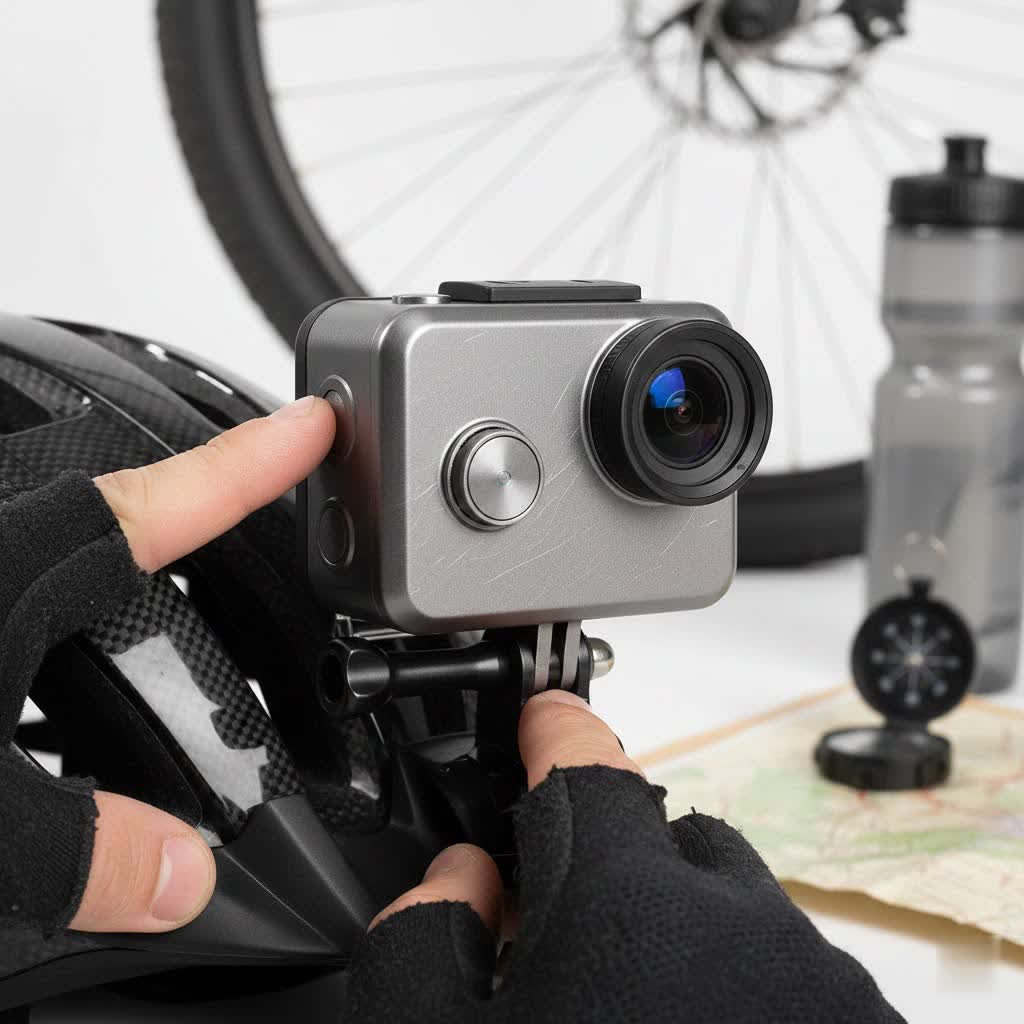
This article will explore the legacy of the GoPro Hero Session, dissect its capabilities, and give you a straight-talking verdict on its relevance today. Whether you’re dusting one off from your gear closet or eyeing a deal on the second-hand market, we’ll cover everything you need to know.
What Exactly Was the GoPro Hero Session?
First, it’s crucial to understand that “Hero Session” refers to two distinct models. The original, launched in 2015, was the HERO4 Session. A year later, it was followed by the significantly upgraded HERO5 Session. While they share the same iconic 1.5-inch cube body, their internals are quite different.
- HERO4 Session: This was the trailblazer. It offered up to 1440p video at 30fps and was waterproof out of the box to 33 feet (10 meters) without needing a bulky housing. Its main selling point was its sheer simplicity and compact size.
- HERO5 Session: This model took the same form factor and injected a serious dose of performance. It introduced 4K video at 30fps, voice control, and electronic image stabilization—features that brought it closer to the flagship models of its time.
The core philosophy for both was “grab and go.” A single press of the shutter button turns the camera on and starts recording. A second press stops recording and powers it down. This streamlined operation, combined with its tiny footprint, made the GoPro Hero Session action camera a favorite for users who valued convenience and discretion above all else.
A Deep Dive into the Session’s Core Features
Let’s break down what made the Session so unique and where its limitations lie. This isn’t about comparing it to the latest flagships; it’s about understanding the tool for what it is.
The Revolutionary Cube Form Factor
|
Our Picks for the Best Action Camera in 2026
As an Amazon Associate I earn from qualifying purchases.
|
||
| Num | Product | Action |
|---|---|---|
| 1 | DJI Osmo Action 5 Pro Standard Combo, Waterproof Action Camera with 1/1.3\" Sensor, 4K/120fps Video, Subject Tracking, Stabilization, Dual OLED Touchscreens, Action Camera 4K Ideal for Sports, Vlog |

|
| 2 | ODDV 4K 30MP Waterproof Action Camera with 60FPS & Dual Screens, 132FT Underwater Camera with 64GB Card, EIS Stabilization, 5X Zoom, WiFi Remote Control Action Camera Ideal for Sports, Snorkeling |
|
| 3 | DJI Osmo Action 5 Pro Essential Combo, Waterproof Action Camera with 1/1.3\" Sensor, 4K/120fps Video, Subject Tracking, Stabilization, Dual OLED Touchscreens, Action Camera 4K Ideal for Sports, Vlog |
|
| 4 | Insta360 X5 - Waterproof 8K 360° Action Camera, Leading Low Light, Invisible Selfie Stick Effect, Rugged and Replaceable Lens, 3-Hour Battery, Built-in Wind Guard, Stabilization, Triple AI Chip Design |
|
| 5 | Mini Action Camera 4K - 128G Thumb Sports Camera with EIS Stabilization, Wearable POV Chest Camera, Waterproof for Running, Cycling, Swimming, Hiking, Outdoor Adventures |
|
| 6 | DJI Osmo Action 4 Standard Combo, 4K/120fps Waterproof Action Camera with a 1/1.3-Inch Sensor, Stunning Low-Light Imaging,10-bit & D-Log M Color Performance, Long-Lasting 160 Mins, Outdoor Camera |
|
| 7 | GoPro HERO13 Black - Waterproof Action Camera with 5.3K60 Video, 27MP Photo + Compatability with HB-Series Lenses |
|
| 8 | Apexcam Action Camera 4K with 64G SD Card Sports Cameras 20MP 131FT Waterproof Underwater Camera WiFi Cameras with 2.4G Remote Control, 2 Batteries, Mounting Accessories Kits |
|
| 9 | 4K 60FPS Waterproof Action Camera,Bare Metal 66FT Underwater Camera,2\" Touch Dual Screen Sports 6-Axis Stabilization,2 Batteries Internal Microphone Vlog Camera for Diving Cycling Outdoor |
|
| 10 | DJI Osmo Action 4 Essential Combo, 4K/120fps Waterproof Action Camera with a 1/1.3-Inch Sensor, Stunning Low-Light Imaging,10-bit & D-Log M Color Performance, Long-Lasting 160 Mins, Outdoor Camera |
|
The Session’s biggest strength was, and still is, its size and shape. Being a perfect cube made it incredibly versatile. You could mount it in tight spaces where a traditional, rectangular GoPro wouldn’t fit—inside a car’s grille, on the tip of a ski, or tucked discreetly onto a helmet. Its symmetrical design meant you could rotate it in its mounting frame without needing different accessories, always keeping it upright. This design was so effective that its influence can be seen in modern cameras like the DJI Action 2 and GoPro’s own HERO11 Black Mini.
Video Quality: Good Enough for its Time
By today’s standards, the Session’s video quality is dated, but that doesn’t mean it’s unusable.
- HERO4 Session: Its 1440p “SuperView” mode offers a tall, immersive field of view that still looks decent for social media. The 1080p at 60fps is perfect for capturing smooth action for casual use.
- HERO5 Session: The jump to 4K/30fps was a major upgrade. The footage is sharp and detailed enough for many applications, even today. It also features ProTune, giving advanced users more control over color, ISO, and sharpness in post-production.
As our in-house filmmaker, Alex ‘Axel’ Rodriguez, often says, “The best camera is the one you have with you. The Session was revolutionary because its size meant you never had an excuse to leave it behind. It captured moments other cameras missed simply by being there.”
However, its low-light performance is a significant weakness. In anything other than bright daylight, the small sensor struggles, and the footage can become grainy and soft.
Is the GoPro Hero Session Still Worth It Today?
This is the million-dollar question. The answer depends entirely on your needs and expectations. The GoPro Hero Session action camera is not for everyone, but for certain users, it remains an excellent choice.
Who Should Still Consider the Hero Session?
- FPV Drone Pilots: The Session’s lightweight, durable, and symmetrical design makes it a legendary choice for the FPV community. It’s often stripped down and mounted on drones for capturing thrilling freestyle footage.
- Budget-Conscious Beginners: If you’re just starting and want to experiment with an action camera without a significant investment, a used HERO5 Session can be found for a fraction of the cost of a new camera. It’s a great way to learn the ropes of filming and editing.
- Users Needing a “B” Camera: For creators who need a secondary, crash-cam, or uniquely-angled shot, the Session is perfect. Its low cost and small size mean you won’t be heartbroken if it takes a tumble, and it can capture perspectives your primary camera can’t.
Where It Falls Short in the Modern Era
- Non-Removable Battery: This is arguably the Session’s biggest flaw. You get about 1.5 to 2 hours of recording time on a full charge, and that’s it. Once the battery is dead, you have to stop and recharge it. You can’t just swap in a fresh one.
- Lack of a Screen: Framing your shot can be a guessing game. While you can connect to the GoPro app on your phone for a live preview, it’s a cumbersome process that defeats the camera’s “grab and go” purpose.
- Outdated Image Stabilization: The electronic stabilization on the HERO5 Session was good for its time, but it pales in comparison to the buttery-smooth HyperSmooth stabilization found on modern GoPros. Expect some shaky footage in rough conditions.
For a look at the latest technology, check out our guide to the Best Action Cameras of 2025.
Tips for Getting the Most Out of Your Session
If you have a GoPro Hero Session action camera or plan on buying one, here are a few tips from my years of using it in the field:
- Master One-Button Mode: Embrace the simplicity. Set your preferred video mode in the app beforehand, so when the action starts, all you need is a single button press.
- Use a Power Bank: To overcome the fixed battery, carry a small, portable power bank. You can top up the camera’s battery between shots or during downtime.
- Frame with Wide Shots: Since you don’t have a screen, film in the widest field of view possible. This gives you more room to crop and reframe your shot in editing, ensuring you don’t miss the action.
- Keep the Lens Clean: It sounds simple, but the small, exposed lens is a magnet for fingerprints and water spots. A quick wipe with a microfiber cloth is essential for clear footage.
Frequently Asked Questions (FAQ)
Is the GoPro Hero Session waterproof?
Yes, both the HERO4 and HERO5 Session models are waterproof down to 33 feet (10 meters) without any external housing, which was a groundbreaking feature at the time.
Can the GoPro Hero Session shoot in 4K?
The original HERO4 Session cannot. Its maximum resolution is 1440p. However, the upgraded HERO5 Session can shoot in 4K at up to 30 frames per second.
Does the GoPro Hero Session have image stabilization?
The HERO4 Session does not have any image stabilization. The HERO5 Session features basic electronic image stabilization, which helps smooth out minor bumps and vibrations but is not as effective as modern stabilization.
Can you still buy the GoPro Hero Session?
GoPro has discontinued the Session line. However, they are widely available on second-hand marketplaces like eBay, and you can often find them in excellent condition for a very affordable price.
How do you change settings on the GoPro Hero Session?
Basic settings can be changed using the small status screen and buttons on the camera. For full control over resolution, frame rates, and ProTune settings, you need to connect the camera to the GoPro Quik app on your smartphone via Wi-Fi.
Our Final Verdict on the GoPro Hero Session
The GoPro Hero Session action camera is a classic for a reason. It was a bold design experiment that paid off, proving that a smaller, simpler camera could be incredibly powerful. In 2025, it’s no longer a contender for your primary action camera. The technology in flagship models has simply lapped it many times over in terms of image quality, stabilization, and battery life.
However, to dismiss it entirely would be a mistake. Its unique form factor, durability, and affordability on the used market give it a second life. It excels in niche applications, serves as a fantastic, low-risk entry point for beginners, and remains a beloved tool in the FPV community. It’s a testament to great design—a tool that, while surpassed, is far from obsolete. If you understand its limitations and play to its strengths, the Hero Session can still help you capture some truly epic shots.
