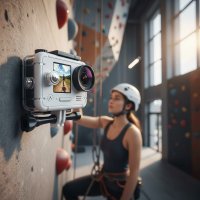
In the world of fast-paced, high-stakes videography, having the right action pro camera in your kit is non-negotiable. For over a decade, I’ve pushed these little powerhouses to their limits, strapping them to everything from race cars to FPV drones. They’ve evolved from simple point-and-shoot devices into sophisticated tools capable of producing truly cinematic footage. But what separates a standard action cam from a pro-level one? It’s more than just a brand name; it’s about features, control, and the creative freedom they unlock.
This guide is your deep dive into the world of professional action cameras. We’ll explore the key features that matter, break down the top models on the market, and share insider tips to help you elevate your footage from good to breathtaking. Whether you’re a seasoned filmmaker or an aspiring creator, this is your roadmap to mastering the art of action videography.
What Defines a Professional Action Camera?
While many cameras can shoot in 4K, a true action pro camera offers a suite of advanced features designed for filmmakers who demand granular control over their final product. These are the specs that truly make a difference.
Superior Image Quality and Control
At the heart of any great camera is its sensor and processing power. For pro-level work, look for:
- Large Sensors: A 1-inch sensor or larger provides better low-light performance, greater dynamic range, and a more cinematic depth of field.
- High Bitrate Recording: A higher bitrate (measured in Mbps) means more data is captured per second, resulting in a cleaner, more detailed image with fewer compression artifacts. This is crucial for color grading in post-production.
- 10-Bit Color Depth: While 8-bit color captures millions of colors, 10-bit captures over a billion. This vast increase prevents color banding in skies and gradients, providing smooth, rich tones perfect for professional editing.
- Log Profiles: Flat or “log” color profiles capture the maximum amount of dynamic range, preserving details in both the highlights and shadows. It looks dull straight out of the camera but provides a flexible canvas for colorists.
- Manual Controls: The ability to manually set ISO, shutter speed, and white balance is fundamental for achieving a consistent, cinematic look across different shots and lighting conditions.
Advanced Stabilization and Performance
Shaky footage is the enemy of professional content. Modern action cameras have incredible electronic image stabilization (EIS), but the best ones take it a step further.
- Horizon Locking: This feature keeps the horizon level no matter how much the camera rotates, a game-changer for FPV drones, mountain biking, and watersports.
- High Frame Rates: Shooting in 4K at 120fps or even 240fps in lower resolutions allows for incredibly smooth, detailed slow-motion playback, adding a dramatic flair to any action sequence.
Top Action Pro Camera Models in 2025
The market is competitive, but a few key players consistently deliver the features professionals need. Here’s a breakdown of the top contenders.
GoPro HERO12 Black: The Industry Standard, Refined
|
Our Picks for the Best Action Camera in 2026
As an Amazon Associate I earn from qualifying purchases.
|
||
| Num | Product | Action |
|---|---|---|
| 1 | DJI Osmo Action 5 Pro Standard Combo, Waterproof Action Camera with 1/1.3\" Sensor, 4K/120fps Video, Subject Tracking, Stabilization, Dual OLED Touchscreens, Action Camera 4K Ideal for Sports, Vlog |

|
| 2 | Insta360 X5 - Waterproof 8K 360° Action Camera, Leading Low Light, Invisible Selfie Stick Effect, Rugged and Replaceable Lens, 3-Hour Battery, Built-in Wind Guard, Stabilization, Triple AI Chip Design |
|
| 3 | ODDV 4K 30MP Waterproof Action Camera with 60FPS & Dual Screens, 132FT Underwater Camera with 64GB Card, EIS Stabilization, 5X Zoom, WiFi Remote Control Action Camera Ideal for Sports, Snorkeling |
|
| 4 | DJI Osmo Action 5 Pro Essential Combo, Waterproof Action Camera with 1/1.3\" Sensor, 4K/120fps Video, Subject Tracking, Stabilization, Dual OLED Touchscreens, Action Camera 4K Ideal for Sports, Vlog |
|
| 5 | DJI Osmo Action 4 Standard Combo, 4K/120fps Waterproof Action Camera with a 1/1.3-Inch Sensor, Stunning Low-Light Imaging,10-bit & D-Log M Color Performance, Long-Lasting 160 Mins, Outdoor Camera |
|
| 6 | 4K 60FPS Waterproof Action Camera,Bare Metal 66FT Underwater Camera,2\" Touch Dual Screen Sports 6-Axis Stabilization,2 Batteries Internal Microphone Vlog Camera for Diving Cycling Outdoor |
|
| 7 | DJI Osmo Action 4 Essential Combo, 4K/120fps Waterproof Action Camera with a 1/1.3-Inch Sensor, Stunning Low-Light Imaging,10-bit & D-Log M Color Performance, Long-Lasting 160 Mins, Outdoor Camera |
|
| 8 | Mini Action Camera 4K - 128G Thumb Sports Camera with EIS Stabilization, Wearable POV Chest Camera, Waterproof for Running, Cycling, Swimming, Hiking, Outdoor Adventures |
|
| 9 | GoPro HERO13 Black - Waterproof Action Camera with 5.3K60 Video, 27MP Photo + Compatability with HB-Series Lenses |
|
| 10 | Apexcam Action Camera 4K with 64G SD Card Sports Cameras 20MP 131FT Waterproof Underwater Camera WiFi Cameras with 2.4G Remote Control, 2 Batteries, Mounting Accessories Kits |
|
GoPro is synonymous with action cameras for a reason. The HERO12 Black continues this legacy, focusing on professional-grade features that creators have been asking for.
- Key Specs: 5.3K60 video, GP-Log with 10-bit color, HyperSmooth 6.0 stabilization, native Bluetooth audio support for external mics.
- Why It’s Pro: The addition of GP-Log and 10-bit color is a massive leap for GoPro, making its footage far more flexible in post-production. The new 8:7 aspect ratio sensor also provides incredible versatility for cropping to various social media formats without losing quality.
DJI Osmo Action 4: The Low-Light King
DJI has emerged as a serious competitor, and the Osmo Action 4 excels where many others struggle: in low light.
- Key Specs: Large 1/1.3-inch sensor, 4K/120fps, 10-bit D-Log M color profile, deep-freeze resistant, magnetic mounting system.
- Why It’s Pro: Its larger sensor gives it a significant advantage in image quality, especially when the sun starts to set. The D-Log M profile is easy to grade, and the magnetic quick-release system is arguably the most efficient and user-friendly mounting solution available.
“In FPV filming, speed and efficiency are everything. The DJI Action 4’s magnetic mount lets me swap cameras between drones in seconds, and its sensor performance at dusk gives me that extra window to get the perfect sunset shot.” – Alex ‘Edge’ Walker, Veteran FPV Pilot
Insta360 Ace Pro: The Smart All-Rounder
Co-engineered with Leica, the Insta360 Ace Pro brings a huge 1/1.3-inch sensor and a host of smart, AI-powered features to the table.
- Key Specs: 8K video, 1/1.3″ Sensor, 2.4″ flip screen, AI-powered features like AI Warp and motion blur.
- Why It’s Pro: Beyond the superb image quality from its Leica lens and large sensor, the Ace Pro stands out with its vlogger-friendly flip screen and intelligent software. The ability to pause and resume recordings in the same file streamlines the workflow, a small but significant detail for professionals.
How to Shoot Like a Pro: Tips and Techniques
Owning an action pro camera is only half the battle. Using it effectively is what creates stunning content. Here are some techniques to elevate your shots.
Master Your Settings
Don’t rely on auto mode. Switch to your camera’s “Pro” or “Manual” settings to take full control.
- Set Your Resolution and Frame Rate: For a cinematic look, shoot in 24fps. For action sequences you plan to slow down, use 60fps or 120fps.
- Lock Your Shutter Speed: Follow the 180-degree rule. Your shutter speed should be double your frame rate (e.g., 1/48s for 24fps). This requires using ND filters in bright light.
- Use ND Filters: Neutral Density (ND) filters are like sunglasses for your camera. They reduce the amount of light hitting the sensor, allowing you to maintain a cinematic shutter speed on bright, sunny days without overexposing your image.
- Keep ISO Low: Set your ISO to the lowest native setting (usually 100) and only increase it when absolutely necessary to minimize image noise.
Focus on Composition and Angles
A great shot tells a story. Think about your angles. Mount your camera in unique places—on the handlebars, under a skateboard, on a helmet—to give viewers a dynamic and immersive perspective. Use the rule of thirds to frame your subjects for a more balanced and visually appealing composition.
The Importance of Audio
Bad audio can ruin a great video. While internal mics are improving, they can’t beat a dedicated external microphone. Use your camera’s media mod or Bluetooth capabilities to connect a lavalier or shotgun mic for crystal-clear dialogue and ambient sounds.
Must-Have Accessories for Your Action Pro Camera
To unlock the full potential of your camera, you’ll need the right accessories.
- ND/PL Filters: A set of high-quality ND and Polarizing filters is essential for controlling exposure and reducing glare.
- Extra Batteries and a Multi-Charger: Action cameras are power-hungry. Always carry at least three extra batteries and a multi-charger to keep you shooting all day.
- A Versatile Mount Kit: A good collection of mounts (chest mount, helmet mount, suction cup, Jaws clamp) will ensure you can get the shot from any perspective.
- A High-Speed MicroSD Card: Use a V30 or V60 rated microSD card to ensure it can handle the high bitrate data from your action pro camera without errors.
Frequently Asked Questions (FAQ)
What is the best action camera for professional use?
The best action pro camera depends on your specific needs. The GoPro HERO12 Black is a fantastic all-rounder with a mature ecosystem. The DJI Osmo Action 4 is the top choice for low-light performance, while the Insta360 Ace Pro excels with its vlogging-friendly features and AI capabilities.
Can I use an action camera for cinematic filming?
Absolutely. By using manual settings, shooting in a flat/log color profile, applying proper color grading, and using ND filters to control motion blur, you can achieve stunningly cinematic results with a modern action camera.
Is 8K in an action camera worth it?
While 8K offers incredible detail, it comes with challenges like large file sizes and high processing demands. For most professional workflows, a high-quality 4K or 5.3K image shot in 10-bit log is more practical and provides more than enough resolution for cropping and reframing in post.
How do I get rid of the “fisheye” look?
Most professional action cameras have a “Linear” or “Dewarp” digital lens setting. This corrects the wide-angle distortion in-camera, giving you a more natural-looking field of view without the curved edges.
What is the most important setting for video quality?
Bitrate is one of the most critical settings. A higher bitrate will always result in a cleaner, more robust image that holds up better during editing and color grading. Always choose the highest quality and bitrate setting your camera offers for professional projects.
Conclusion
The modern action pro camera is a marvel of engineering, packing professional-grade features into a pocket-sized, rugged body. By understanding and utilizing advanced settings like 10-bit color, log profiles, and manual exposure, you can move beyond simple recording and start creating truly compelling, cinematic stories. The GoPro HERO12, DJI Osmo Action 4, and Insta360 Ace Pro all offer unique strengths, but the best camera is the one that empowers your creative vision. So, choose your tool, get out there, and start shooting. We can’t wait to see what you create.
Get our weekly buyer guide
Practical specs, not advice. Unsubscribe anytime.