An action camera with zoom primarily uses digital zoom rather than optical zoom due to design constraints focused on durability, waterproofing, and compact size. While optical zoom physically adjusts lenses for lossless magnification, digital zoom crops and enlarges a portion of the image, which can degrade quality. Top models like the GoPro HERO12 Black, DJI Osmo Action 4, and Insta360 Ace Pro offer advanced digital zoom features and high-resolution sensors to minimize quality loss when zooming.
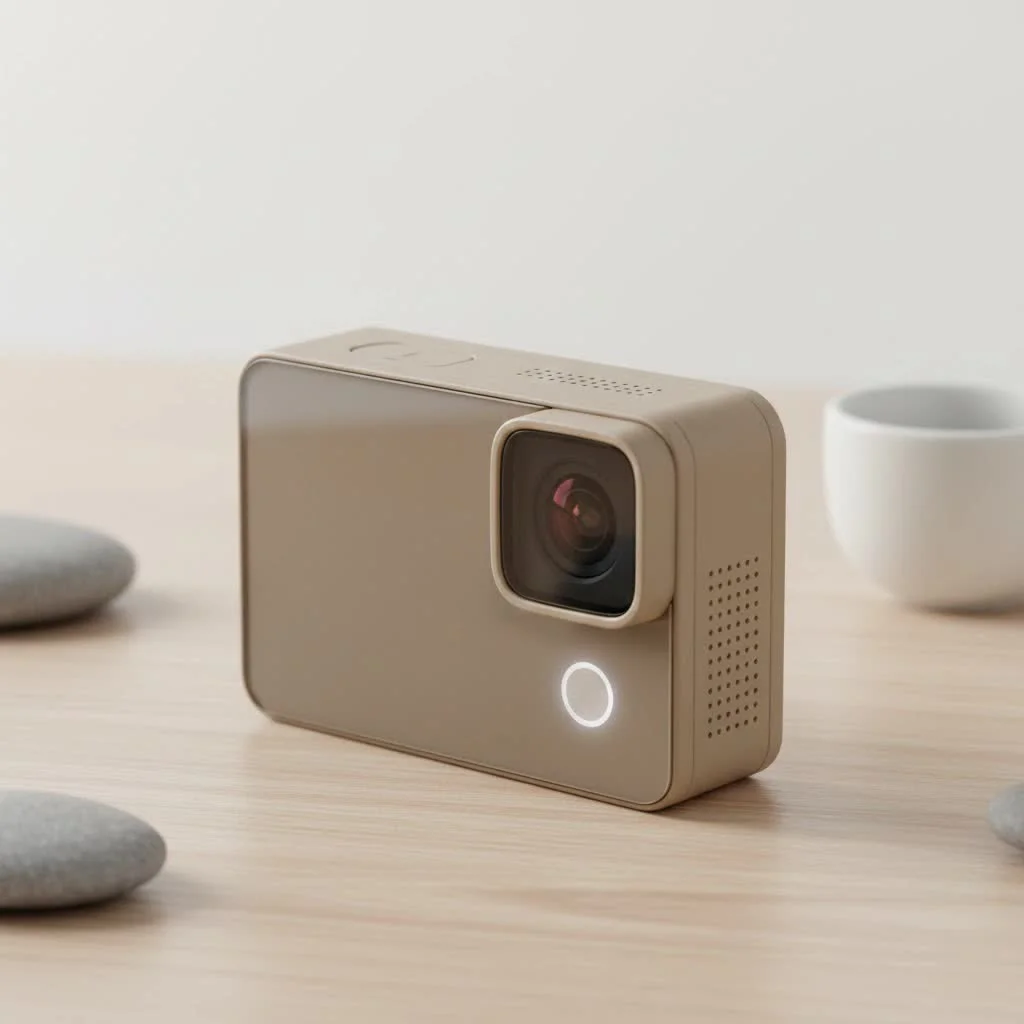
This guide explores the differences between optical and digital zoom, explains why optical zoom is rare in action cameras, and highlights the best options available today for getting closer to the action. For reviews buying guides on this site.
Understanding Zoom: Optical vs. Digital in Action Cameras
Before diving into specific models, it’s critical to understand the two kinds of zoom. They sound similar, but their impact on your final video quality is worlds apart.
What is Optical Zoom?
Optical zoom involves the physical movement of glass lenses inside the camera body. Similar to a DSLR or mirrorless camera, the lens elements shift to change the focal length, genuinely magnifying the scene before it hits the sensor. This process preserves full image quality and resolution, providing true, lossless magnification of your subject.
What is Digital Zoom?
Digital zoom, conversely, does not use any moving parts. Instead, the camera’s software takes a portion of the image from the sensor and simply enlarges it to fill the frame. It’s cropping the image in real-time. While convenient, this process inevitably leads to a degradation of image quality. The more you digitally zoom, the more pixelated and less sharp your footage becomes because fewer pixels are used to create the final image.
Why is Optical Zoom So Rare in Action Cameras?
If optical zoom is superior, why isn’t it found in the latest GoPro or DJI models? The answer lies in the core design philosophy of an action camera.
- Durability and Waterproofing: Action cameras are built to withstand abuse, including drops, vibrations, and water immersion. A complex, moving lens assembly introduces more seals that can fail and delicate mechanics that can break on impact, making it a major weak point.
- Size and Weight: Adding a physical zoom lens would significantly increase the camera’s size and weight, making it cumbersome to mount on helmets, chests, or bikes. The compact form factor is a key selling point for action cameras.
- Wide-Angle Lens: The signature immersive, wide-angle look of action camera footage is what makes them so popular. Designing a lens that can do both ultra-wide and telephoto is a significant engineering challenge, especially within a tiny package.
As our lead gear analyst, Alex Carter, often states: “Manufacturers must make a choice. For action cameras, they’ve prioritized ultimate durability and a compact form factor over the mechanical complexity of optical zoom. The focus is on capturing the entire scene reliably, under any conditions.”
Top Action Cameras with Notable Zoom Features in 2025
While true optical zoom is not typically available, top brands have developed powerful digital zoom and field-of-view tools that offer impressive versatility. The key is to shoot in the highest possible resolution (such as 5.3K or 4K) to provide the software with more data, minimizing quality loss.
GoPro HERO12 Black
|
Our Picks for the Best Action Camera in 2026
As an Amazon Associate I earn from qualifying purchases.
|
||
| Num | Product | Action |
|---|---|---|
| 1 | GoPro HERO13 Black - Waterproof Action Camera with 5.3K60 Video, 27MP Photo + Compatability with HB-Series Lenses |

|
| 2 | ODDV 4K 30MP Waterproof Action Camera with 60FPS & Dual Screens, 132FT Underwater Camera with 64GB Card, EIS Stabilization, 5X Zoom, WiFi Remote Control Action Camera Ideal for Sports, Snorkeling |
|
| 3 | Mini Action Camera 4K - 128G Thumb Sports Camera with EIS Stabilization, Wearable POV Chest Camera, Waterproof for Running, Cycling, Swimming, Hiking, Outdoor Adventures |
|
| 4 | Insta360 X5 - Waterproof 8K 360° Action Camera, Leading Low Light, Invisible Selfie Stick Effect, Rugged and Replaceable Lens, 3-Hour Battery, Built-in Wind Guard, Stabilization, Triple AI Chip Design |
|
| 5 | DJI Osmo Action 4 Standard Combo, 4K/120fps Waterproof Action Camera with a 1/1.3-Inch Sensor, Stunning Low-Light Imaging,10-bit & D-Log M Color Performance, Long-Lasting 160 Mins, Outdoor Camera |
|
| 6 | DJI Osmo Action 5 Pro Essential Combo, Waterproof Action Camera with 1/1.3\" Sensor, 4K/120fps Video, Subject Tracking, Stabilization, Dual OLED Touchscreens, Action Camera 4K Ideal for Sports, Vlog |
|
| 7 | DJI Osmo Action 4 Essential Combo, 4K/120fps Waterproof Action Camera with a 1/1.3-Inch Sensor, Stunning Low-Light Imaging,10-bit & D-Log M Color Performance, Long-Lasting 160 Mins, Outdoor Camera |
|
| 8 | 4K 60FPS Waterproof Action Camera,Bare Metal 66FT Underwater Camera,2\" Touch Dual Screen Sports 6-Axis Stabilization,2 Batteries Internal Microphone Vlog Camera for Diving Cycling Outdoor |
|
| 9 | DJI Osmo Action 5 Pro Standard Combo, Waterproof Action Camera with 1/1.3\" Sensor, 4K/120fps Video, Subject Tracking, Stabilization, Dual OLED Touchscreens, Action Camera 4K Ideal for Sports, Vlog |
|
| 10 | Apexcam Action Camera 4K with 64G SD Card Sports Cameras 20MP 131FT Waterproof Underwater Camera WiFi Cameras with 2.4G Remote Control, 2 Batteries, Mounting Accessories Kits |
|
GoPro uses a feature called Digital Lenses instead of traditional “zoom.” By tapping the screen, you can cycle through different fields of view (FOV):
- SuperView/HyperView: The widest, most immersive perspective.
- Wide: The classic GoPro FOV.
- Linear: Corrects fisheye distortion for a more natural look.
- Linear + Horizon Lock: Keeps the horizon level, even if the camera rotates.
- Narrow: This is the most “zoomed-in” perspective, offering a tighter crop of the scene.
You can also use the intuitive pinch-to-zoom gesture on the rear touchscreen to smoothly zoom in while recording. Because the HERO12 Black shoots in a very high 5.3K resolution, a modest digital zoom for a 1080p or even 4K timeline can appear surprisingly clean.
DJI Osmo Action 4
DJI has adopted a direct approach. The Osmo Action 4 offers straightforward digital zoom that can be operated while filming. It is capable of zooming up to 4x for photos and up to 2x for video. The RockSteady 3.0+ stabilization effectively keeps footage smooth even when zoomed in, which is often a challenge for digital zooms. The large sensor on the Action 4 also helps retain more detail compared to older cameras when utilizing zoom.
Insta360 Ace Pro
The Insta360 Ace Pro, co-engineered with Leica, features Clarity Zoom. This allows for a 2x zoom that, according to Insta360, can be used without any loss in quality. This is achieved by using the high-resolution 48MP sensor to crop into a specific area, effectively delivering a cleaner result than standard digital zoom. You can double-tap the screen to instantly punch in or out, making it a user-friendly feature for capturing distant subjects on the fly.
How to Make the Most of Your Action Camera’s Digital Zoom
Using an action camera with zoom effectively requires skill. Simply punching in 4x will not yield great results. Here are some professional tips from the RWSTX team.
- Shoot in the Highest Resolution: This is the most crucial rule. If your camera offers 5.3K or 4K, use it. This provides more pixels for the digital zoom to work with, resulting in a cleaner, sharper image when you crop in.
- Use Zoom Sparingly: Consider digital zoom as a tool for slight reframing, not for capturing wildlife from a mile away. Small, subtle zooms are far more effective than extreme ones.
- Frame Wider and Crop in Post: Often, the best approach is to forgo in-camera zoom entirely. Shoot in your widest, highest-resolution setting. This captures the entire scene and provides maximum flexibility later. In your editing software, you can zoom, pan, and reframe the shot perfectly without being locked into a decision made in the field.
- Mind Your Stabilization: Zooming magnifies camera shake. Ensure your camera’s electronic image stabilization (such as HyperSmooth, RockSteady, or FlowState) is activated. For the smoothest shots, consider using a gimbal or a tripod when planning to use zoom.
Frequently Asked Questions (FAQ)
Does a GoPro have an optical zoom?
No, no GoPro model has ever featured an optical zoom. They rely on powerful digital zoom and multiple fields of view (Digital Lenses) to create a zoomed-in effect by cropping the high-resolution sensor.
Is digital zoom on an action camera any good?
It can be, if used correctly. On modern cameras like the GoPro HERO12 or DJI Action 4, a small amount of digital zoom (e.g., up to 1.4x) in a 4K video can be virtually indistinguishable from a non-zoomed shot, especially for online viewing. Heavy zooming will always result in a noticeable loss of quality.
What is the best action camera for zooming?
The Insta360 Ace Pro with its “Clarity Zoom” feature arguably provides one of the cleanest 2x zoom experiences. However, the GoPro HERO12 Black’s combination of 5.3K resolution and versatile Digital Lenses gives you incredible flexibility for cropping and reframing in post-production, which is often a better workflow.
Can I zoom while I am recording video?
Yes, all major modern action cameras, including the latest models from GoPro, DJI, and Insta360, allow you to use their digital zoom features while actively recording video.
How does using zoom affect battery life?
Using digital zoom has a negligible effect on battery life. It is a software-based process that doesn’t require extra power for moving mechanical parts like an optical zoom would. Your battery life will be far more impacted by screen brightness, resolution, and frame rate settings.
The Final Frame: Zooming in on the Right Choice
While the dream of a rugged, waterproof action camera with zoom—a true optical zoom, that is—remains elusive, the tools at our disposal are more powerful than ever. Modern action cameras leverage high-resolution sensors and incredibly sophisticated software to provide versatile digital zoom and framing options that, when used wisely, can absolutely help you get the shot.
Instead of getting fixated on the zoom specification, focus on the overall image quality and resolution. A camera that shoots pristine 5.3K footage gives you immense freedom to crop in later, which is the most powerful form of “zoom” you can have. Capture the whole scene, stay in the action, and then craft your perfect frame when you’re back in the edit bay. Now go out there and get some incredible shots
Make the Most of Your Action Camera's Digital Zoom
Learn how to effectively use digital zoom on your action camera to capture cleaner, sharper images and videos.
Always use your camera's highest available resolution, such as 5.3K or 4K. This provides more pixels for the digital zoom to work with, resulting in a cleaner, sharper image when you crop in.
Consider digital zoom as a tool for slight reframing, not for extreme magnification. Small, subtle zooms are far more effective than extreme ones, which can lead to significant quality degradation.
Often, the best approach is to avoid in-camera zoom entirely. Shoot in your widest, highest-resolution setting to capture the entire scene. This gives you maximum flexibility to zoom, pan, and reframe the shot perfectly later in editing software.
Zooming magnifies camera shake, so ensure your camera's electronic image stabilization (like HyperSmooth, RockSteady, or FlowState) is turned on. For the smoothest shots, consider using a gimbal or a tripod when planning to use zoom.
Get our weekly buyer guide
Practical specs, not advice. Unsubscribe anytime.

I picked up the Insta360 Ace Pro hoping the digital zoom would be a game-changer, but I’m a bit underwhelmed. While it’s great for wide shots, once I start zooming in past 2x, I really notice the image degradation, especially in lower light. I understand why optical zoom isn’t common, but I wish the digital compensation was a bit better.
I appreciate how the guide explained the difference between optical and digital zoom. It really helped me set my expectations for what an action camera can do. My new camera, which has advanced digital zoom, works perfectly for my surfing videos, letting me get closer to the action without sacrificing durability.
I’ve been using the DJI Osmo Action 4 for a few months now, and the digital zoom on it is surprisingly good. I was skeptical about digital zoom degrading quality, but with the high-res sensor, my zoomed-in shots still look really crisp. It’s perfect for capturing wildlife when I can’t get physically closer.
The GoPro HERO12 Black’s zoom capabilities are pretty solid for an action camera. I mostly use it for mountain biking, and being able to punch in a bit on distant features without stopping is super handy. It’s not optical zoom, but for quick action shots, it definitely gets the job done without much noticeable quality loss.