As a professional videographer who has strapped cameras to just about everything that moves, I’ve seen my fair share of gear come and go. One name that often comes up in conversations with fellow tech enthusiasts is Garmin. While known for GPS watches and navigation systems, their foray into the camera world left a significant mark. If you’re searching for a Garmin Action Camera today, you’re likely curious about their past offerings, how they stack up, and if they’re still a viable option. Let’s dive into the story of the Garmin VIRB and answer those questions.
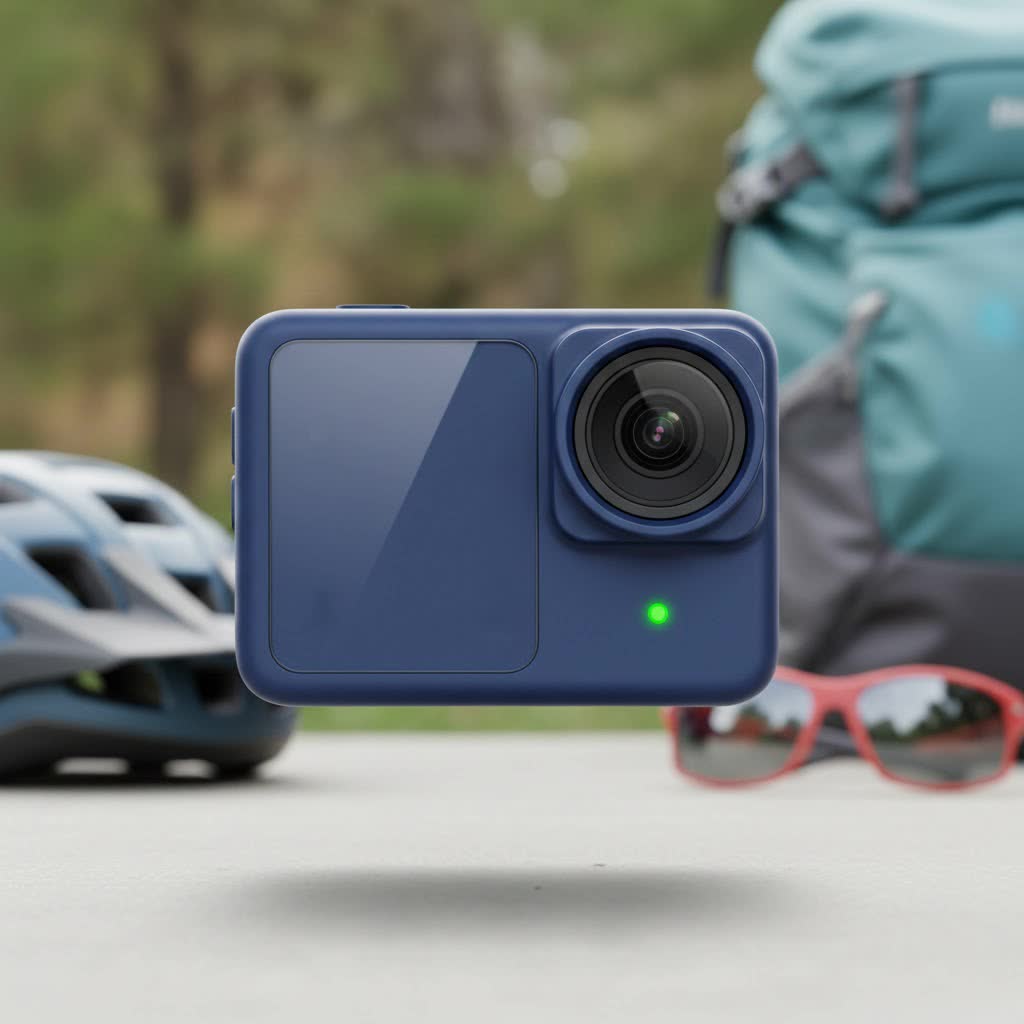
For over a decade at RWSTX, we’ve tested countless cameras, and the Garmin VIRB series always stood out for one big reason: data. Garmin didn’t just want you to see your adventure; they wanted you to prove it with cold, hard stats.
The Rise and Fall of the Garmin VIRB Series
Garmin entered the action camera market with its VIRB line, aiming to take on the reigning champion, GoPro. The series evolved over a few years, culminating in what many consider its peak: the Garmin VIRB Ultra 30. These cameras were rugged, capable, and brought a unique feature set to the table that was distinctly Garmin.
However, the action camera market is notoriously competitive. Despite creating a solid product, Garmin eventually shifted its focus back to its core product categories. As of 2025, Garmin no longer manufactures or sells new action cameras. Their product pages have been replaced by dash cams and other camera-related vehicle accessories, marking the end of the VIRB era.
A Closer Look: The Garmin VIRB Ultra 30
To understand what a Garmin action camera was capable of, we need to look at its last flagship model, the VIRB Ultra 30. Released back in 2016, it was a direct competitor to the GoPro HERO5 Black and was, in many ways, ahead of its time.
Key Specifications
- Video Resolution: 4K at 30fps, 1080p at 120fps
- Image Stabilization: 3-axis electronic image stabilization (usable up to 2.7K)
- Waterproofing: Required an included waterproof case
- Control: Voice control, touchscreen, and physical buttons
- Connectivity: Wi-Fi, Bluetooth, ANT+
|
Our Picks for the Best Action Camera in 2026
As an Amazon Associate I earn from qualifying purchases.
|
||
| Num | Product | Action |
|---|---|---|
| 1 | GoPro HERO13 Black - Waterproof Action Camera with 5.3K60 Video, 27MP Photo + Compatability with HB-Series Lenses |

|
| 2 | DJI Osmo Action 4 Standard Combo, 4K/120fps Waterproof Action Camera with a 1/1.3-Inch Sensor, Stunning Low-Light Imaging,10-bit & D-Log M Color Performance, Long-Lasting 160 Mins, Outdoor Camera |
|
| 3 | DJI Osmo Action 5 Pro Standard Combo, Waterproof Action Camera with 1/1.3\" Sensor, 4K/120fps Video, Subject Tracking, Stabilization, Dual OLED Touchscreens, Action Camera 4K Ideal for Sports, Vlog |
|
| 4 | Insta360 X5 - Waterproof 8K 360° Action Camera, Leading Low Light, Invisible Selfie Stick Effect, Rugged and Replaceable Lens, 3-Hour Battery, Built-in Wind Guard, Stabilization, Triple AI Chip Design |
|
| 5 | ODDV 4K 30MP Waterproof Action Camera with 60FPS & Dual Screens, 132FT Underwater Camera with 64GB Card, EIS Stabilization, 5X Zoom, WiFi Remote Control Action Camera Ideal for Sports, Snorkeling |
|
| 6 | Mini Action Camera 4K - 128G Thumb Sports Camera with EIS Stabilization, Wearable POV Chest Camera, Waterproof for Running, Cycling, Swimming, Hiking, Outdoor Adventures |
|
| 7 | Apexcam Action Camera 4K with 64G SD Card Sports Cameras 20MP 131FT Waterproof Underwater Camera WiFi Cameras with 2.4G Remote Control, 2 Batteries, Mounting Accessories Kits |
|
| 8 | 4K 60FPS Waterproof Action Camera,Bare Metal 66FT Underwater Camera,2\" Touch Dual Screen Sports 6-Axis Stabilization,2 Batteries Internal Microphone Vlog Camera for Diving Cycling Outdoor |
|
| 9 | DJI Osmo Action 4 Essential Combo, 4K/120fps Waterproof Action Camera with a 1/1.3-Inch Sensor, Stunning Low-Light Imaging,10-bit & D-Log M Color Performance, Long-Lasting 160 Mins, Outdoor Camera |
|
| 10 | DJI Osmo Action 5 Pro Essential Combo, Waterproof Action Camera with 1/1.3\" Sensor, 4K/120fps Video, Subject Tracking, Stabilization, Dual OLED Touchscreens, Action Camera 4K Ideal for Sports, Vlog |
|
While these specs might seem standard today, features like voice control and a high-quality touchscreen were cutting-edge at the time. The camera produced sharp, vibrant 4K footage that could easily compete with the best on the market.
The Standout Feature: What is G-Metrix?
The true killer feature for any Garmin action camera was G-Metrix. This system used a built-in 10Hz GPS and a host of other sensors (accelerometer, gyroscope, altimeter) to capture performance data while you were recording. Through Garmin’s VIRB Edit desktop software, you could overlay this data onto your videos.
Imagine watching your mountain bike descent with a gauge showing your speed, a graph charting your elevation drop, and a meter displaying the G-forces in every turn. This was what set Garmin apart. It wasn’t just a camera; it was a data-logging device that created a more immersive and analytical record of your activities.
As David Chen, a professional FPV drone pilot and data analyst, once told me, “The footage is only half the story. G-Metrix allowed us to visualize the performance behind the flight. Seeing the speed, altitude, and flight path overlaid on the video was a game-changer for analyzing our runs.”
This feature was particularly beloved by motorsports enthusiasts, cyclists, skiers, and pilots who craved that extra layer of context in their videos.
How Did the Garmin VIRB Compare to GoPro?
The VIRB Ultra 30 was a formidable opponent to the GoPro HERO5 Black. Here’s a quick breakdown of how they stacked up:
| Feature | Garmin VIRB Ultra 30 | GoPro HERO5 Black |
|---|---|---|
| Data Overlays | Superior (G-Metrix) | Basic |
| Waterproofing | Required a case | Natively waterproof to 10m |
| Microphone | Good quality, even in case | Excellent audio |
| User Interface | Intuitive touchscreen | Intuitive touchscreen |
| Image Quality | Excellent, sharp 4K | Excellent, slightly warmer colors |
Garmin’s main advantages were its data integration and a very user-friendly menu system. However, GoPro’s decision to make its cameras waterproof without a case was a huge practical advantage for many users, simplifying setup and improving audio quality. Ultimately, GoPro’s brand dominance and marketing muscle were difficult to overcome.
Should You Buy a Used Garmin Action Camera in 2025?
This is the crucial question. With the VIRB series discontinued, you can only find them on the second-hand market. Here’s a balanced look at the pros and cons.
Pros:
- Niche Data Features: If the G-Metrix data overlay is your primary interest, there is still nothing on the market that integrates it as seamlessly as the Garmin VIRB.
- Potential for a Good Deal: As older tech, you might find a VIRB Ultra 30 for a very low price.
- Great Image Quality: For a well-lit shot, the 4K video from the VIRB Ultra 30 still holds up reasonably well.
Cons:
- Outdated Technology: Image stabilization, low-light performance, and processing speeds in modern cameras from DJI, Insta360, and GoPro are vastly superior.
- No Support or Updates: You will receive no further firmware updates, bug fixes, or official support from Garmin. The VIRB Edit software may also become incompatible with future operating systems.
- Battery Life and Availability: Finding new, genuine replacement batteries will be difficult, and the original batteries will have degraded over time.
- Fragility: You are entirely dependent on the waterproof case for protection, which adds bulk and another potential point of failure.
For the vast majority of users, buying a used Garmin action camera is not recommended. The technological gap has simply grown too wide. However, for a data-obsessed user with a specific project in mind, it could be a fun and inexpensive tool.
Top Alternatives to a Garmin Action Camera
If you were drawn to Garmin, you likely value performance, durability, and great features. Here are the brands and models that should be on your radar today:
- GoPro: The GoPro HERO series remains the industry standard. Their latest models offer incredible “HyperSmooth” stabilization, 5.3K resolution, and a massive ecosystem of mounts and accessories.
- DJI: The DJI Osmo Action line is GoPro’s fiercest competitor. They often innovate with features like a front-facing screen for vlogging and an excellent magnetic mounting system.
- Insta360: While known for their 360-degree cameras, Insta360 also makes fantastic traditional action cameras like the Ace Pro. They excel in AI-powered software features and modular designs.
Frequently Asked Questions (FAQ)
What was the last Garmin action camera?
The last major flagship model was the Garmin VIRB Ultra 30, released in 2016. Garmin also released the VIRB 360, but has since exited the action camera market.
Is the Garmin VIRB better than a GoPro?
At the time of its release, the Garmin VIRB Ultra 30 was a strong competitor to the equivalent GoPro model, and it was superior in its ability to capture and display performance data (G-Metrix). However, modern GoPro cameras far surpass the VIRB in stabilization, image quality, and features.
Why did Garmin stop making action cameras?
While Garmin hasn’t made an official, detailed statement, the decision was likely a strategic business move to exit a highly competitive market and focus on their core, more profitable areas like GPS wearables, and aviation and marine technology.
Can you still buy a Garmin action camera?
You cannot buy a new Garmin action camera from Garmin or major retailers. They are only available through second-hand marketplaces like eBay, but availability and condition will vary greatly.
What software was used for G-Metrix?
Garmin provided a free desktop application called VIRB Edit. This software allowed users to import footage and automatically sync it with the captured G-Metrix data to add custom gauges, graphs, and overlays to their videos.
Final Thoughts
The Garmin action camera series was a fantastic product line that carved out a unique space in a crowded market. The VIRB’s legacy is its pioneering integration of GPS and sensor data, which turned exciting video footage into a comprehensive performance record. While we at RWSTX have fond memories of testing and using the VIRB, we can’t recommend a used model for most people in 2025.
The technology has leaped forward, and today’s cameras from leading brands offer a significantly better user experience. If you want to capture your adventures, look to the latest offerings from GoPro, DJI, or Insta360. They carry the torch of innovation that Garmin once helped to light.
