There’s a moment on every hunt that’s seared into your memory: the quiet stillness of the woods at dawn, the snap of a twig that raises your senses, and the adrenaline surge when your target finally appears. What if you could capture that entire sequence, not just in your mind, but in stunning 4K detail? That’s where the modern hunting action camera transforms your experience. Forget fumbling with your phone; these specialized cameras are built to withstand the elements, mount directly to your gear, and capture the shot of a lifetime with the press of a single button. As a professional videographer who has spent over a decade in the field, I’ve seen firsthand how the right camera can not only preserve your memories but also make you a better hunter.
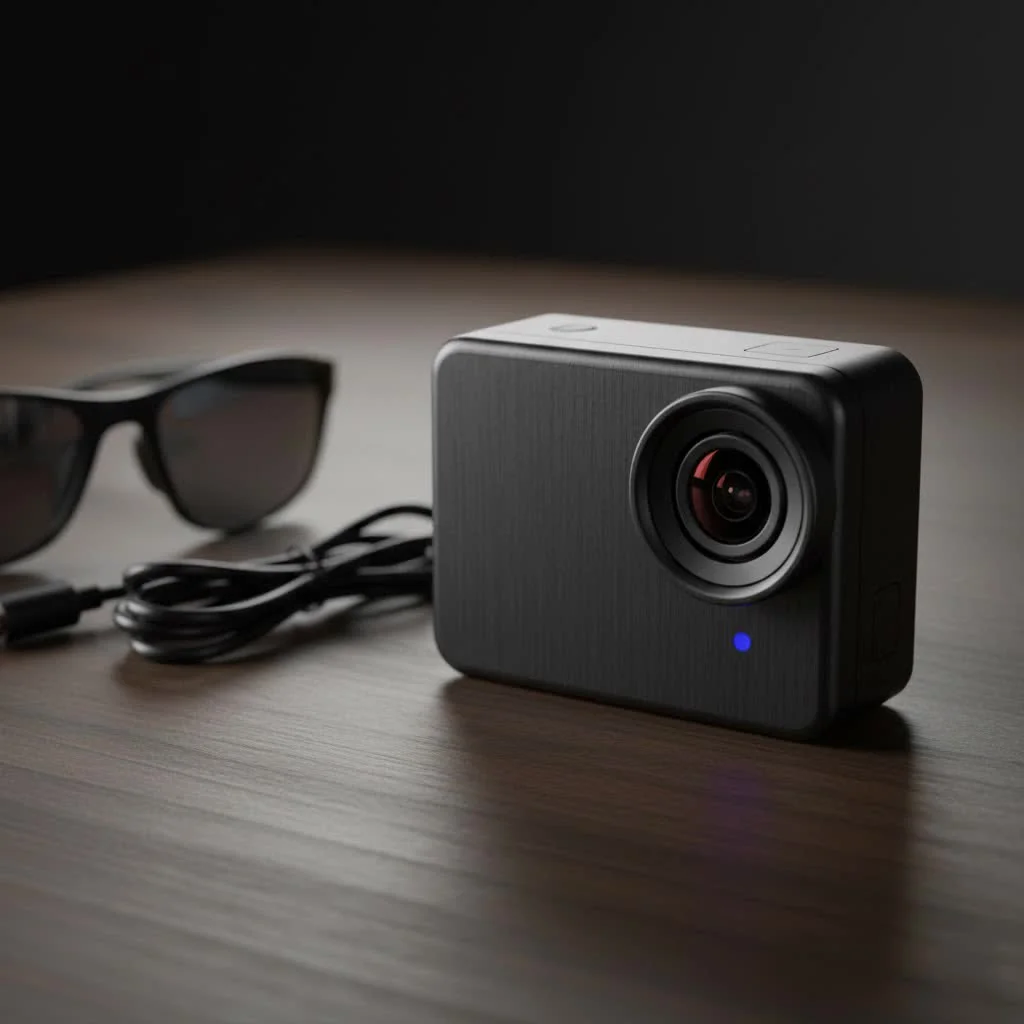
Why a Dedicated Hunting Action Camera Beats a Smartphone
Many hunters ask me, “Can’t I just use my phone?” While smartphone cameras are incredibly advanced, they fall short in the demanding environment of a hunt. A dedicated hunting action camera is a true game-changer for several key reasons:
- Durability: These cameras are built to be shockproof, waterproof, and dustproof. They can handle being dropped, rained on, or dragged through the mud without a hiccup.
- Mounting Capabilities: The biggest advantage is the ability to mount the camera directly onto your bow, scope, or barrel. This provides a true first-person view (FPV) of your shot, something a phone simply cannot replicate safely or effectively.
- Hands-Free Operation: The best models feature one-touch recording. You can start filming instantly, even with gloves on, without taking your eyes off the target or your hands off your weapon.
- Superior Optics: Specialized lenses and sensors are designed to capture crisp detail at a distance and often perform better in the low-light conditions common during early morning and late evening hunts.
Key Features to Look for in a Hunting Action Camera
Choosing the right camera can feel overwhelming with all the technical jargon out there. Let’s break down the essential features you need to focus on to ensure you get a device that performs when it matters most.
Video Resolution and Frame Rate
This is all about the quality and smoothness of your video.
- Resolution: Look for a minimum of 1080p HD, but 4K is the modern standard. 4K provides incredible clarity, allowing you to zoom in on details later without losing quality. It makes the difference between seeing a blur and seeing the exact moment of impact.
- Frame Rate (fps): This determines how smooth your video is, especially for slow-motion. 60fps is excellent for standard-speed playback, while 120fps or even 240fps will allow you to create breathtaking, ultra-slow-motion replays to analyze your shot placement.
Unshakeable Image Stabilization
|
Our Picks for the Best Action Camera in 2026
As an Amazon Associate I earn from qualifying purchases.
|
||
| Num | Product | Action |
|---|---|---|
| 1 | Insta360 X5 - Waterproof 8K 360° Action Camera, Leading Low Light, Invisible Selfie Stick Effect, Rugged and Replaceable Lens, 3-Hour Battery, Built-in Wind Guard, Stabilization, Triple AI Chip Design |

|
| 2 | GoPro HERO13 Black - Waterproof Action Camera with 5.3K60 Video, 27MP Photo + Compatability with HB-Series Lenses |
|
| 3 | DJI Osmo Action 5 Pro Standard Combo, Waterproof Action Camera with 1/1.3\" Sensor, 4K/120fps Video, Subject Tracking, Stabilization, Dual OLED Touchscreens, Action Camera 4K Ideal for Sports, Vlog |
|
| 4 | 4K 60FPS Waterproof Action Camera,Bare Metal 66FT Underwater Camera,2\" Touch Dual Screen Sports 6-Axis Stabilization,2 Batteries Internal Microphone Vlog Camera for Diving Cycling Outdoor |
|
| 5 | Apexcam Action Camera 4K with 64G SD Card Sports Cameras 20MP 131FT Waterproof Underwater Camera WiFi Cameras with 2.4G Remote Control, 2 Batteries, Mounting Accessories Kits |
|
| 6 | DJI Osmo Action 4 Essential Combo, 4K/120fps Waterproof Action Camera with a 1/1.3-Inch Sensor, Stunning Low-Light Imaging,10-bit & D-Log M Color Performance, Long-Lasting 160 Mins, Outdoor Camera |
|
| 7 | DJI Osmo Action 5 Pro Essential Combo, Waterproof Action Camera with 1/1.3\" Sensor, 4K/120fps Video, Subject Tracking, Stabilization, Dual OLED Touchscreens, Action Camera 4K Ideal for Sports, Vlog |
|
| 8 | ODDV 4K 30MP Waterproof Action Camera with 60FPS & Dual Screens, 132FT Underwater Camera with 64GB Card, EIS Stabilization, 5X Zoom, WiFi Remote Control Action Camera Ideal for Sports, Snorkeling |
|
| 9 | DJI Osmo Action 4 Standard Combo, 4K/120fps Waterproof Action Camera with a 1/1.3-Inch Sensor, Stunning Low-Light Imaging,10-bit & D-Log M Color Performance, Long-Lasting 160 Mins, Outdoor Camera |
|
| 10 | Mini Action Camera 4K - 128G Thumb Sports Camera with EIS Stabilization, Wearable POV Chest Camera, Waterproof for Running, Cycling, Swimming, Hiking, Outdoor Adventures |
|
Hunting is rarely a stationary activity. You’re tracking, breathing, and dealing with recoil. Electronic Image Stabilization (EIS) is a non-negotiable feature. It digitally smooths out the bumps, shakes, and vibrations, giving you clean, watchable footage instead of a jittery mess. Advanced stabilization can make footage from a walking stalk look almost as smooth as if it were shot on a tripod.
Battery Life: The Make-or-Break Spec
Your camera is useless if it’s dead. A long day in the field requires a battery that can keep up. Look for cameras that offer at least 2-3 hours of continuous recording time. Many top-tier models come with swappable batteries, allowing you to carry a spare and easily extend your filming time. Always check real-world reviews, as manufacturer claims can sometimes be optimistic.
“In my experience, the number one reason hunters miss capturing a key moment is a dead battery. I always advise carrying a fully charged spare. It adds almost no weight and provides invaluable peace of mind.” – John Carter, Professional Wildlife Videographer
Mounting Options and Versatility
How you mount your hunting action camera determines your perspective. The three primary mounting types are:
- Barrel/Scope Mounts: Ideal for rifle and shotgun hunters, these provide a “through the scope” or parallel view that captures exactly what you were aiming at.
- Stabilizer/Bow Mounts: These are designed for archers, attaching to the bow’s stabilizer to capture the arrow’s flight and impact without interfering with your form.
- Head/Chest Mounts: These offer a wider point-of-view, capturing more of the environment, your movements, and the overall experience of the hunt. They are great for telling a more complete story.
Low-Light Performance
Deer, elk, and other game are most active during the “golden hours” of dawn and dusk. A camera with a high-quality sensor and a wide aperture (a lower f-stop number) will pull in more light, producing clearer, less grainy footage in these challenging conditions. This is a feature where higher-end cameras truly separate themselves from budget options.
Top Hunting Action Camera Models to Consider
While specific models change year to year, they generally fall into a few categories. Here’s a look at the types of cameras you’ll find on the market.
| Category | Ideal For | Key Strengths | Potential Drawbacks |
|---|---|---|---|
| The All-Around Pro | Hunters who want the best quality and features. | 4K at 60fps+, advanced stabilization, excellent low-light performance, rugged build. | Highest price point. |
| The Archery Specialist | Bowhunters who need a lightweight, streamlined setup. | Compact design, easy bow mounting, simple one-touch operation. | May lack some advanced features of larger models. |
| The Budget Champion | Beginners or hunters on a tight budget. | Good 1080p or basic 4K video, simple controls, affordable. | Weaker battery life, less effective stabilization. |
When making your choice, think about your primary hunting style. A shotgun hunter filming fast-moving birds has different needs than a long-range rifle hunter or a close-quarters bowhunter.
How to Set Up Your Camera for the Perfect Shot
- Choose Your Mount: Securely attach the mount to your scope, barrel, or bow. Ensure it’s tight and doesn’t impede your handling of the weapon.
- Align Your Camera: This is the most critical step. Before the hunt, turn the camera on and align it to ensure it’s capturing your point of aim. Most cameras connect to a smartphone app via Wi-Fi for a live preview, making this process much easier.
- Check Your Settings: Set your desired resolution and frame rate. For most hunts, 4K at 60fps is a fantastic all-around setting. If you want dramatic slow-motion, switch to 1080p at 120fps.
- Format Your SD Card: Always start a hunt with a freshly formatted, high-quality SD card. This prevents data corruption and ensures you have plenty of space.
- Practice: Do a few dry runs at home or at the range. Practice turning the camera on and off with one touch so it becomes second nature.
Frequently Asked Questions (FAQ)
What is the best action camera for bow hunting?
For bow hunting, you want a lightweight and compact hunting action camera that won’t affect your bow’s balance. Look for models with dedicated stabilizer mounts and one-touch recording, so you can activate it silently at full draw if needed.
Can I use a GoPro for hunting?
Yes, you can absolutely use a GoPro for hunting, and many people do. Its main strengths are excellent video quality and stabilization. However, you will need to invest in third-party mounts to attach it to a firearm or bow, and its shape can be less streamlined than dedicated hunting cameras.
How many hours of video can a 64GB card hold?
This depends on your video settings. At 4K/60fps, a 64GB card will hold roughly 1.5 to 2 hours of footage. If you shoot at 1080p/60fps, you can expect to store around 4 to 5 hours of video.
Do these cameras have zoom?
Most hunting action cameras use a fixed-focus wide-angle lens and do not have optical zoom. Some offer a digital zoom, but using it will degrade your image quality. The best practice is to rely on the high resolution of 4K to crop in on the action during editing.
Are hunting action cameras legal?
In most places, yes. However, it is crucial to check your local and state hunting regulations. Some jurisdictions may have specific rules regarding electronics mounted on hunting equipment. Always verify the laws in your area before heading out.
Capture More Than Just a Trophy
A hunting action camera does more than just record a harvest. It captures the full story of your adventure—the preparation, the landscape, the camaraderie, and the skill involved. It allows you to relive your favorite moments, share them with friends and family, and even analyze your technique to become a more effective hunter. By investing in the right camera and learning how to use it, you’re not just buying a piece of technology; you’re preserving a legacy of your time in the great outdoors. So get out there, press record, and make some memories that will last forever.
Get our weekly buyer guide
Practical specs, not advice. Unsubscribe anytime.
I was skeptical about spending extra on a dedicated hunting camera when my phone takes decent videos. However, the ruggedness and weatherproofing mentioned really sold me. Took it out in some light rain and it performed perfectly. My only minor gripe is that the battery life could be a bit better, but it’s manageable for a day hunt.
As someone who loves reliving my hunts, this guide was super helpful. I picked up a camera that was recommended for its low-light performance, and it’s made a huge difference for those early morning or late evening shots. It’s incredible to see the entire sequence unfold in such clear detail. My hunting buddies are all asking about it now!
I got one of these after seeing a buddy use his. The 4K detail is pretty awesome, and it’s definitely built tough. My main issue is with the button placement; it’s a little awkward to hit when I’m wearing thick gloves, which is often during hunting season. Still, it’s better than trying to use my phone.
I’ve been using a GoPro for years, but after reading about the specialized hunting action cameras, I decided to upgrade. The ability to mount it directly to my bow and not worry about fumbling with my phone is a game-changer. Captured some amazing footage of a deer last season that I never would have gotten otherwise. Definitely worth the investment for serious hunters.