Welcome back to the RWSTX labs! I’m Alex ‘Axel’ Reynolds, and for over a decade, I’ve had my hands on nearly every action camera that’s hit the market. Today, we’re taking a look back at a truly unique player in the game: the Polaroid Action Camera. The name “Polaroid” often conjures images of instant photos shaking in the air, but for a time, the brand dove headfirst into the action sports world with a product that was as charming as it was unconventional.
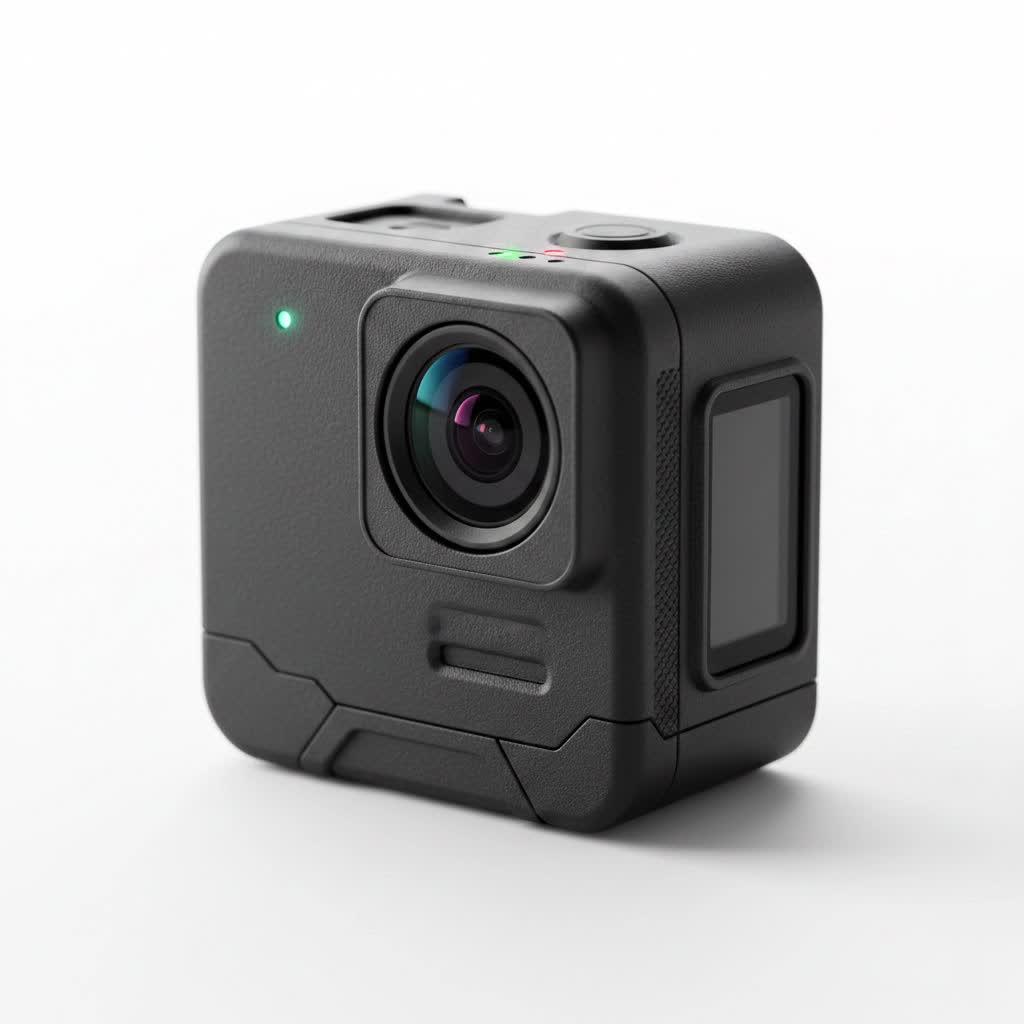
But is there still a place for a Polaroid action camera in today’s market, dominated by high-tech giants? Let’s dive in, explore the legacy of their most famous model, the Cube, and see who might still get a kick out of this quirky piece of tech history.
The Rise of a Different Kind of Action Cam
When the action camera market was heating up, most companies were trying to outdo each other with specs and rugged designs. Polaroid took a different path. Instead of creating another GoPro clone, they focused on simplicity, fun, and a design-first approach. This philosophy was perfectly embodied in their flagship product: the Polaroid Cube.
Released in 2014, the Cube was a tiny, 35mm rubberized square that was splash-resistant, shockproof, and incredibly simple to use. It was a breath of fresh air. It wasn’t about capturing professional-grade cinematic shots; it was about capturing life’s little moments with ease and style.
What Made the Polaroid Cube Special?
The Cube’s appeal wasn’t just its look; it was its brilliant simplicity. Here’s what made it stand out:
- Magnetic Personality: The single most ingenious feature was the powerful magnet built into its base. You could stick it to your bike, your helmet, your fridge, or any metal surface without needing a complicated mount. It was grab-and-go in its purest form.
- One-Button Operation: There were no complex menus or tiny screens. A single button on top controlled everything. You’d press it to turn it on, press it again to take a photo, and hold it to start and stop video recording. A series of beeps and a small LED light told you what mode you were in. It was incredibly intuitive.
- Solid, Fun Design: Wrapped in a durable, rubbery shell with the iconic Polaroid rainbow stripe, the Cube felt solid and fun. It was designed to be handled, dropped, and used without worry, making it an excellent camera for kids or casual outings.
|
Our Picks for the Best Action Camera in 2026
As an Amazon Associate I earn from qualifying purchases.
|
||
| Num | Product | Action |
|---|---|---|
| 1 | DJI Osmo Action 5 Pro Essential Combo, Waterproof Action Camera with 1/1.3\" Sensor, 4K/120fps Video, Subject Tracking, Stabilization, Dual OLED Touchscreens, Action Camera 4K Ideal for Sports, Vlog |

|
| 2 | Insta360 X5 - Waterproof 8K 360° Action Camera, Leading Low Light, Invisible Selfie Stick Effect, Rugged and Replaceable Lens, 3-Hour Battery, Built-in Wind Guard, Stabilization, Triple AI Chip Design |
|
| 3 | 4K 60FPS Waterproof Action Camera,Bare Metal 66FT Underwater Camera,2\" Touch Dual Screen Sports 6-Axis Stabilization,2 Batteries Internal Microphone Vlog Camera for Diving Cycling Outdoor |
|
| 4 | Apexcam Action Camera 4K with 64G SD Card Sports Cameras 20MP 131FT Waterproof Underwater Camera WiFi Cameras with 2.4G Remote Control, 2 Batteries, Mounting Accessories Kits |
|
| 5 | DJI Osmo Action 5 Pro Standard Combo, Waterproof Action Camera with 1/1.3\" Sensor, 4K/120fps Video, Subject Tracking, Stabilization, Dual OLED Touchscreens, Action Camera 4K Ideal for Sports, Vlog |
|
| 6 | GoPro HERO13 Black - Waterproof Action Camera with 5.3K60 Video, 27MP Photo + Compatability with HB-Series Lenses |
|
| 7 | DJI Osmo Action 4 Standard Combo, 4K/120fps Waterproof Action Camera with a 1/1.3-Inch Sensor, Stunning Low-Light Imaging,10-bit & D-Log M Color Performance, Long-Lasting 160 Mins, Outdoor Camera |
|
| 8 | Mini Action Camera 4K - 128G Thumb Sports Camera with EIS Stabilization, Wearable POV Chest Camera, Waterproof for Running, Cycling, Swimming, Hiking, Outdoor Adventures |
|
| 9 | DJI Osmo Action 4 Essential Combo, 4K/120fps Waterproof Action Camera with a 1/1.3-Inch Sensor, Stunning Low-Light Imaging,10-bit & D-Log M Color Performance, Long-Lasting 160 Mins, Outdoor Camera |
|
| 10 | ODDV 4K 30MP Waterproof Action Camera with 60FPS & Dual Screens, 132FT Underwater Camera with 64GB Card, EIS Stabilization, 5X Zoom, WiFi Remote Control Action Camera Ideal for Sports, Snorkeling |
|
“The Polaroid Cube wasn’t trying to compete with the feature-heavy cameras of its time,” notes vintage tech analyst Dr. Evelyn Reed. “It was a lifestyle product. It made video capture accessible and fun, appealing to a completely different audience that was intimidated by the complexity and cost of mainstream action cameras.”
A Closer Look at the Specs: Good for its Time
As a professional, I have to look at the numbers. While the Cube wasn’t a powerhouse, its specs were respectable for its era and price point.
The original Polaroid Cube featured:
- Video Resolution: 1080p or 720p, both at 30 frames per second.
- Photo Resolution: 6 megapixels.
- Lens: A 124° wide-angle lens, which was great for capturing the whole scene.
- Battery Life: An internal battery that provided up to 90 minutes of recording time.
- Storage: It supported a microSD card up to 32GB.
Later, Polaroid released the Cube+, which brought some welcome upgrades, including Wi-Fi connectivity to sync with a smartphone app, improved 1440p video resolution, 8MP photos, and electronic image stabilization. These features made it a more versatile and capable camera, bringing it closer to the competition.
However, the camera had its limitations. The audio was often muffled due to the sealed, splash-proof design, and low-light performance was not its strong suit. The built-in battery also meant you couldn’t swap it out on the go, a common feature in other action cams.
So, What Happened to the Polaroid Action Camera?
Despite its initial popularity and unique design, the Polaroid action camera line quietly faded from the market. The industry evolved at a breakneck pace. Competitors, especially from budget-friendly brands, began offering higher resolutions, better stabilization, and more features for a similar price. The Cube’s simplicity, once its greatest strength, became a limitation as users began to expect more from their devices.
Today, Polaroid’s focus has returned to its roots in instant photography, and they are no longer producing new action camera models. The Cube and its siblings have become interesting relics of a specific time in the action cam evolution.
Who Should Buy a Polaroid Action Camera Today?
Even though it’s discontinued, you can still find the Polaroid Cube on second-hand marketplaces. But who should actually consider buying one?
- Collectors and Tech Enthusiasts: The Cube is a classic piece of design. It’s a great item for anyone who appreciates unique tech history and industrial design.
- Parents Looking for a Kid’s First Camera: Its durability, simple operation, and friendly design make it a fantastic and low-cost introduction to videography for children.
- Casual Users on a Tight Budget: If you just want a simple, no-fuss camera to stick on your bike for a leisurely ride or to capture a fun time-lapse, a used Cube can be a bargain.
You should probably look elsewhere if you are a serious athlete, a vlogger, or anyone needing high-quality, stable footage with great audio. Modern budget action cameras will offer far superior performance.
Modern Alternatives to the Polaroid Action Camera
If you love the idea of the Cube but need more modern performance, here are a few alternatives that capture its spirit of simplicity and value:
| Camera Model | Key Features | Best For |
|---|---|---|
| AKASO Brave Series | 4K video, image stabilization, waterproof housing, dual screens. | Budget-conscious adventurers who still want high-end features. |
| GoPro HERO (Older Models) | Proven performance, great image quality, vast accessory ecosystem. | Anyone looking for reliable, high-quality footage on a budget (second-hand). |
| DJI Osmo Action (Older Models) | Excellent image stabilization, great front-facing screen. | Vloggers and selfie-shooters looking for smooth, stable video. |
Frequently Asked Questions (FAQ)
Can you still buy a Polaroid action camera?
You can no longer buy them new from Polaroid. However, you can often find them for sale on second-hand online marketplaces like eBay or through individual sellers.
Does the Polaroid Cube need a waterproof case?
The Polaroid Cube is splash-resistant and weatherproof, meaning it can handle rain or splashes. For full underwater use, you will need the optional dedicated waterproof case, which allows it to go to depths of up to 10 meters.
How do you charge a Polaroid Cube?
The Polaroid Cube has a small hatch on the back. You open it with a coin, which reveals a micro USB port for charging and a microSD card slot.
Does the Polaroid action camera have image stabilization?
The original Polaroid Cube does not have image stabilization, which means footage can be shaky. The upgraded Polaroid Cube+ model included electronic image stabilization for smoother video.
Can the Polaroid Cube connect to a phone?
The original Cube does not have Wi-Fi. The Polaroid Cube+ model includes Wi-Fi, allowing it to connect to a companion app on iOS and Android devices for a live viewfinder, remote control, and sharing footage.
Final Thoughts: A Lovable Legacy
The Polaroid action camera, especially the Cube, was never meant to be the most powerful or feature-packed device on the market. It was an experiment in fun, simplicity, and design. It carved out a niche for itself and proved that not everyone needs a professional-grade camera to capture their adventures.
From my perspective here at RWSTX, the Cube holds a special place in action camera history. It was a bold and playful device that reminds us that sometimes, the best camera is the one that’s the most fun to use. If you stumble upon one for a good price and manage your expectations, it’s a wonderful piece of tech that’s guaranteed to put a smile on your face.
